Maycroft

Featured (homepagina)

Featured (homepagina)

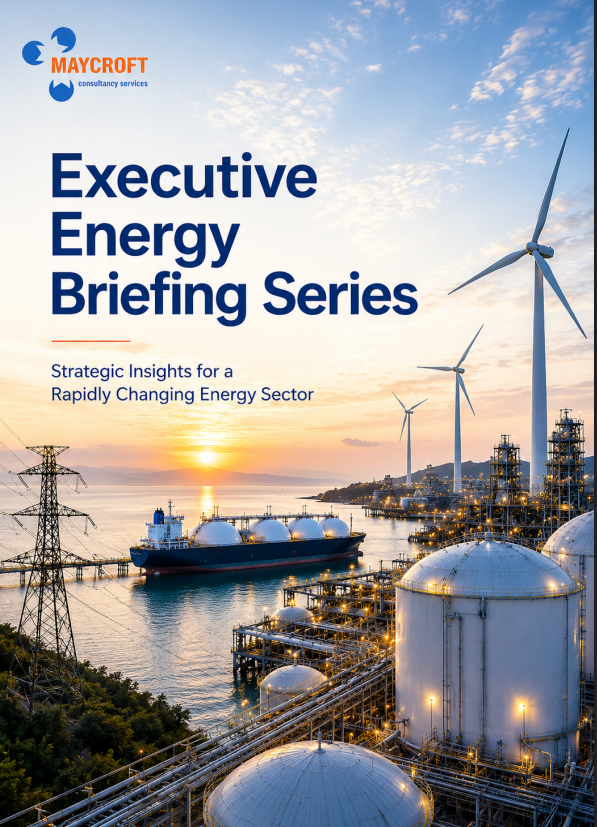
The Executive Energy Briefing Series

Strategic Insights from a rapidly changing Energy Sector The rules of the energy industry are changing. Electricity and gas markets are becoming increasingly volatile. Business models are evolving. New technologies are disrupting established practices. Geopolitical developments continue to reshape global energy markets, while the path towards net zero is proving more complex than many expected. For today’s energy professionals, staying informed is no longer enough. Understanding what is changing, why it matters and how to respond has become a strategic competitive advantage. The Executive Energy Intelligence Series is a subscription-based program of concise, high-impact executive briefings that provide practical, independent and up- to-date insights into the developments shaping today’s energy markets. Rather than delivering theoretical training, each live session (60–120 minutes) provides market intelligence that helps organisations understand emerging trends, assess their business impact and prepare for future market developments. Drawing on more than 30 years of international experience in energy markets, trading, regulation, risk management and commercial contracting, each briefing combines strategic insight with practical business relevance. Why Organizations Subscribe: The Executive Energy Intelligence Series helps organizations remain informed, prepared and ready to respond to rapidly changing market conditions. Subscribers benefit from: Independent market intelligence and expert analysis Practical insights rather than theoretical training Better understanding of commercial, regulatory and technology developments Interactive discussions with an experienced international energy market expert A continuous professional development programme instead of isolated training Unlike market reports or industry news, every briefing explains what developments mean for your organisation and the strategic decisions you may need to consider. Every Briefing Answers Four Key Questions: What has changed? Why does it matter? What are the commercial implications? How should organisations prepare? We Answer Questions That Matter: Why is the energy transition evolving differently than expected? Are negative electricity prices a threat or a business opportunity? What is really driving carbon prices? Can battery storage deliver sustainable returns? Is hydrogen finally becoming commercially viable? How is artificial intelligence changing energy markets? What will the next generation of Power Purchase Agreements look like? How are LNG and gas markets evolving? How can organizations prepare for tomorrow”s electricity markets? Available Intelligence series: Choose the program that best matches your organization’s strategic interests: European Power Markets Southeast Asia Energy Markets Middle East Energy Markets LNG & Gas Markets Energy Transition Carbon Markets Energy Trading & Risk Management Renewable Energy & Storage Artificial Intelligence in Energy Each series consists of independent executive briefings that can be delivered individually or as a structured annual subscription program. Subscription Options: Whether you are an individual professional seeking continuous market intelligence or an organisation looking to keep your teams ahead of market developments, we offer flexible subscription options. individual Subscription Ideal for professionals who want to stay informed throughout the year. Includes: Annual Executive Energy Intelligence program Live online executive briefings Interactive Q&A Presentation slides Investment: From €995 per participant per year Corporate Annual Subscriptions Essentials: Regular executive briefings providing strategic insights into the latest developments across the energy sector. Includes: Six Executive Energy Intelligence Briefings per year Live online delivery Interactive Q&A Presentation slides Up to 50 participants per briefing Investment: From €7,500 per year Professional (Most Popular) A comprehensive market intelligence program designed to keep your organization informed throughout the year. Includes: Ten Executive Energy Intelligence Briefings per year Live online delivery Interactive Q&A Presentation slides Session recordings Up to 100 participants per briefing Investment: From €12,500 per year Enterprise A premium intelligence program tailored to your organization’s strategic priorities. Includes Ten Executive Energy Intelligence Briefings per year Live online or on-site delivery Unlimited participants Interactive Q&A Presentation slides and recordings Two customised Executive Briefings on topics of your choice Priority scheduling Optional advisory support between briefings Investment: From €18,500 per year Executive Briefings Individual executive briefings can also be delivered for: Executive management teams Boards of Directors Utilities Energy companies Industry associations Conferences In-house leadership programmes Available online or on-site. Investment: From €2,000 per briefing Tailored to Your Organisation Every organisation faces different challenges. Our Executive Energy Intelligence Series can be fully customized to reflect your regional markets, technologies, strategic priorities and business objectives. Whether you require a single executive briefing, a corporate subscription or a fully tailored intelligence program, we will work with you to develop a solution that delivers lasting value. Ready to Stay Ahead? The energy sector will continue to evolve—and so will the challenges and opportunities facing your organization. Whether you are looking for a single Executive Briefing, a tailored in-house program or a year-round Executive Energy Intelligence Subscription, we can help your team stay informed, prepared and ready to respond to an increasingly dynamic energy landscape. Every organization has different priorities. That’s why all program can be tailored to your strategic objectives, regional focus and business needs. Let’s start the conversation. Schedule a complimentary 30-minute consultation to discuss how the Executive Energy Intelligence Series can support your organization’s strategic learning and development objectives. We would be pleased to discuss: The most suitable briefing series for your organization Individual or corporate subscription option In-company or conference presentations Regional and sector-specific briefings Please send an email outlining your interests and objectives. I will then contact you to arrange a video call at a mutually convenient time. Contact: Kasper Walet, Founder & CEO Maycroft walet@maycroft.com +31 6 53818191 Executive Energy Insights (Substack): Regular analysis and commentary on the latest developments in global energy markets. https://kasperwalet.substack.com/ LinkedIn: https://www.linkedin.com/in/kasper-walet/
Featured (homepagina)

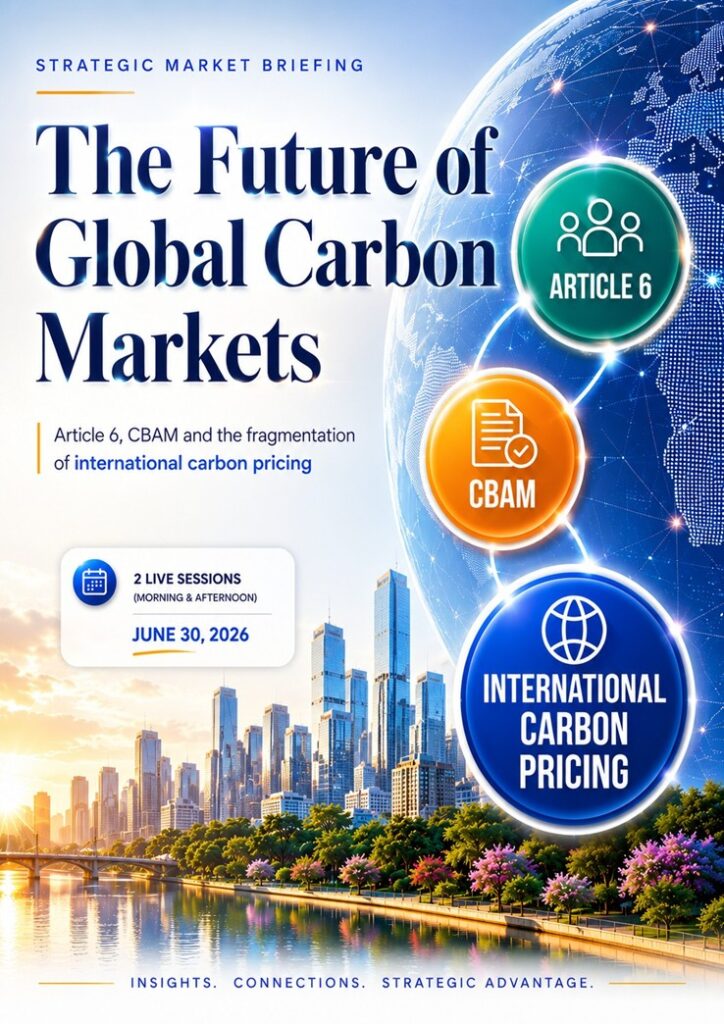
The Future of Global Carbon Markets

Global carbon markets are entering a new geopolitical era Why Now?Article 6 implementation is accelerating.CBAM is beginning to reshape international competitiveness and trade flows.Voluntary carbon markets are undergoing significant transformation.Carbon pricing is increasingly becoming a geopolitical and economic issue rather than solely an environmental policy instrument. Carbon pricing is increasingly evolving beyond environmental policy and becoming a strategic factor in: international trade, industrial competitiveness, supply chains, investment decisions and geopolitical positioning. At the same time: Article 6 is laying the foundations for international carbon trading, CBAM is reshaping export competitiveness, voluntary carbon markets are entering a critical new phase and regional carbon systems are becoming increasingly fragmented and strategic. The implications increasingly affect: Commodity traders, exporters, industrial companies, financial institutions, governments and global investors. This premium live session provides a strategic overview of the structural developments likely to shape the next phase of global carbon markets. “Carbon markets are increasingly becoming strategic economic and geopolitical instruments rather than purely environmental policy tools” Session Structure Carbon Markets Become Geopolitical                                                                                                    Why carbon pricing increasingly affects trade, competitiveness and industrial strategy Key ThemesFragmentation of global carbon systems                                                                                                CBAM and implications for exporters                                                                                                      Industrial competitiveness and carbon pricing                                                                                          Geopolitical dimensions of carbon markets “CBAM and Article 6 may increasingly reshape international competitiveness and global trade flows” Article 6 and the Rise of International Carbon Trading                                                                        The emergence of cross-border carbon market mechanisms Key ThemesLatest Article 6 developments and COP outcomes                                                                                    Sovereign carbon strategies and international cooperation                                                                        Corresponding adjustments and market integrity                                                                                    Future of international carbon trading “Article 6 could become one of the most important international carbon market developments of the decade” Voluntary Carbon Markets and Global Carbon Pricing                                                                          The search for credibility, scale and market integration Key ThemesLatest developments in voluntary carbon markets                                                                                  Credit integrity, removals and transparency                                                                                              High-quality carbon credits and market confidence                                                                                    Interaction between voluntary and compliance systems “The future of voluntary carbon markets depends on trust, scale and standardization” Future of Global Carbon Markets                                                                                                          What companies, investors and market participants should watch next Key ThemesFragmentation versus globalization of carbon markets                                                                              Future interaction between ETS and VCM systems                                                                                    Strategic implications for exporters and investors                       

Featured (homepagina)

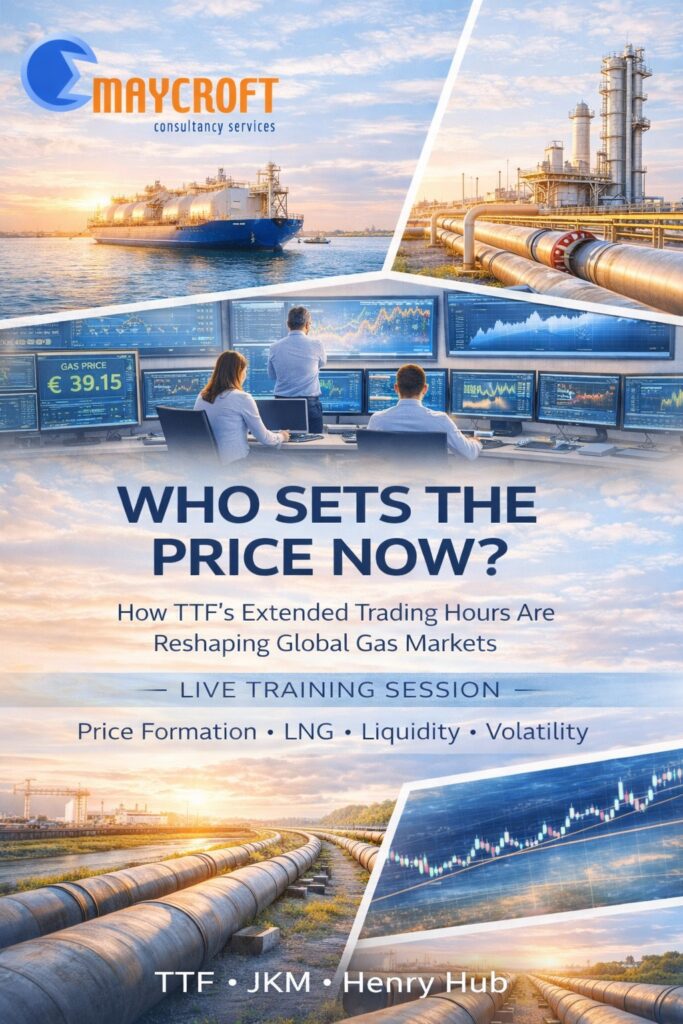
How TTF extended Trading Hours are reshaping Global Gas Markets

European gas markets are no longer priced on a European clock. As TTF trading hours expand, price formation is becoming more continuous, more global, and faster-moving. This course explains what that means in practice — for liquidity, volatility, and cross-basin trading between TTF, JKM, and LNG markets. In a focused 3-hour session, you’ll gain a clear understanding of how market dynamics are shifting, who is gaining influence, and how to adapt your trading, hedging, and risk strategies accordingly. Session dates & times To accommodate global participants, two sessions are available: –  Tuesday, May 27 — 09:00–12:00 CET (Europe & Asia) –  Wednesday, May 28 — 14:00–17:00 CET (Europe & Americas) (International participants: please adjust for your local time zone) Reserve your spot Places are limited to keep the session focused and interactive. If you work with TTF, LNG, or cross-basin gas exposure, this session will give you a clearer view of how the market is evolving — and what that means for your decisions. Early registration is recommended: – Early bird: €395 (deadline: May 19) – Standard: €495 – Group (3+): €325 (early bird), €425 per participant To register, please fill in the contact form and indicate what date you will participate You will receive a confirmation with payment details and joining instructions. Secure your place now! TTF Gas Training Registration

Featured (homepagina)

How non-EU companies could profit from the EU Green Agenda

The European Commission wants a decisive, economically strong and competitive EU. The energy transition is an important pillar for achieving this. The green revolution to zero carbon at 2050 at the latest, as promoted by the EU may cost some and other priorities do not seem to exist. Dutch climate minister Jetten, for example, has banned the words “feasible and affordable” in relation to meeting climate targets. Good news for companies from all over the world that could offer their products to Europe. The underlying idea of the European energy transition is that humanity made progress thanks to energy sources becoming more efficient, cheaper and more reliable. Now we are going to try the opposite, and whichever way you look at it, that is going to cost prosperity. The energy transition is going to be very expensive for Europe. Especially when you consider that for a meager 15% renewable power share on a European scale since 2003, THOUSAND MILLION euros have already been spent on subsidies. Money that would finally only reduce the EU part of global emissions: 8%. What return/cost ratio is that? Europe even wants to accelerate the energy transition by taking all kinds of obvious measures to reduce the demand through actions such as home insulation, energy savings and rooftops full of solar panels and to increase the supply of renewable energy. Despite what the rest of the world is doing about the transition. Supply and demand of electricity must match to avoid blackouts. This is precisely the great weakness of renewable energy, such as wind and solar power. They provide power when the wind blows and the sun shines, and otherwise they don’t, which is a huge problem for a reliable, stable power supply. Therefor it is astounding that another interesting zero carbon form of energy, nuclear power, is not much more developed in Europe. Even worse, today Germany has closed the last 3 of its  nuclear power plants. Still there are in the EU, dozens of nuclear power plants generating dozens of gigawatts of green power. They have been doing so for decades: safe, stable, predictable and at a proven competitive cost. As Europe seeks to accelerate the phaseout of its dispatchable energy with gas and coal-fired power plants, the question is how will the erratic fluctuations in wind power production be absorbed to avoid blackouts? For the European Commission, the panacea for absorbing these gigantic fluctuations is green hydrogen. Excess ind power should be used to produce hydrogen from water using so-called electrolysers. That hydrogen is then used to generate electricity to fill the dips in wind power production, a cycle in which at least two-thirds of the power generated is lost. In itself, a green hydrogen economy is possible, but it has not yet been realized anywhere in the world, even on a small scale. Besides hydrogen is not an energy source but an energy carrier. A carrier, which would then have to be produced via already inefficient intermittent power that would then be converted at gigantic conversion losses of 70 percent or more into the most low-grade application imaginable: fuel in a (truck) car. Which means that tenfold more wind and solar farms would have to be built, only  to make up for the conversion losses. By enforcing highly optimistic green sustainable goals (Environmental & Social Governance, or ESG for short), Europe disadvantaged oneself.  The technology is still (far) from being ready for it and more importantly the rest of the world is absolutely not worried about ESG. At least not for now. Part of the ESG targets are lower investments in oil and gas reserves as a reult the oil and gas prices go up and with them all other prices. For example, because of higher gas prices, the price of fertilizer goes up what will inflate the food prices. The European Commission’s green agenda offers very good opportunities for investors from other parts of the world and for companies from countries that can produce green hydrogen cheaply and supply it to Europe to meet their huge needs to meet climate goals. The necessary funds are for grabs.

Featured (homepagina)

The Dirty Green Energy Game with China

The faster we go green, the sooner we can do without Russian gas, is the adage in Europe. But then we run the risk of becoming dependent again, on superpower China. Once in the world, wind turbines, solar panels and electric cars are indeed the pinnacle of clean energy. However, their conception is a dirty business. In terms of CO2 emissions, there is no debate: wind and solar power are far superior to oil and coal. Nuclear power too, as a low-carbon energy source requiring fewer metals than green technologies, can play a key role in the energy transition. However, what politicians, NGOs and environmentalists do not seem to realize is that the beautiful ideal of a low-carbon economy requires a lot of raw materials. The switch to green energy means that we will need more aluminium, copper, lithium, rare earths and other metals, which cause a different kind of pollution to fossil fuels. The magnets in an electric car require six times more lithium, manganese, neodymium and other minerals than an ordinary car, and a wind power plant up to nine times more than a gas power plant, show IEA figures. For many of these metals Europe needs the Chinese even more than they do need Russians for gas. The silicon or gallium in solar panels? China supplies 61 and 73 percent of the world’s supply, respectively, figures from the European Commission show. Graphite for electric car batteries? 69 percent. Neodymium in offshore wind turbines? 95 percent. Of antimony China supplies 87 percent, of bismuth 82 percent, of tungsten 84 percent and of yttrium 95 percent. More than nine out of ten electric vehicles currently have an engine with green elements. If we want to meet the Paris climate targets, our use of them will have to increase sevenfold by 2040, according to the IEA. Just before the turn of the millennium, Japan, the US and Europe together controlled 90 percent of the magnet market, now China is the undisputed market leader. Lured by cheap labour, lax environmental laws and rich mineral resources, many factories and jobs have moved to China in recent decades. For companies, this was a pact with the devil, for in exchange for access to China’s metals, they had to reveal their technological secrets. Those who did not want to move were forced to compete with their hands tied: while their rivals in China paid rock-bottom prices for green elements, China pushed international prices up to artificial heights by rationing exports. As Western companies moved their production to China, they got the best of both worlds: the lowest prices, and no pollution in our backyard. Thus, now it is the Chinese population that pays the price. China has many cancer villages, where rivers and rice fields are polluted with the cadmium and indium for solar panels, or the green elements for windmills. Rural dwellers thus pay the price for the clean energy of (foreign) city dwellers, in the form of cancer, birth defects or respiratory diseases. Just to refine a ton of rare earths requires 200 cubic meters  of water, which then flows into rivers, soils and ground waters polluted with metals and sulphuric and hydrochloric acid. It is therefore a lie that green energy is clean. Well, on the front end it certainly is, but not at the back end. Besides we are selling us out to China. Source: VK

Featured (homepagina)

1st ever REMIT arrests; get your compliance in order

Danish police arrested eight employees at an energy trading company who will face charges of manipulating prices on the Nordic electricity exchange. This is the first known arrest for breaches of REMIT, with other cases resulting in fines. They risk up to 6 years in prison. When as many as eight people are arrested for market manipulation, it indicates an poor compliance culture throughout the company. Danish police said they have apprehended three directors and five traders of an energy trading company that trades electricity on NordPool exchange and charged them with market manipulation. The company is believed to have earned illegal profits of 100 million Danish crowns (€ 13.2 million) or more, police said in a statement. The apprehended individuals work for a company in the city of Aarhus, trading electricity on the Nordic market. The police have raided several addresses and have seized ten properties belonging to six of the eight accused. These are houses and apartments in North Zealand, Thy, the Aarhus area as well as Central and Eastern Jutland and a small piece of forest in Jutland. The eight employees of the Danish power trading company will be held in police custody for the next four weeks while suspicion of market manipulation is investigated, a court in the city of Aarhus ruled.  All eight suspects had pleaded not guilty . Denmark’s national police unit for special crime said the group had been charged, but did not name them or the company they worked for. The court later issued a gag order prohibiting media from identifying the suspects. During the constitutional inquiry at the Aarhus district court it became clear that the police suspects that the accused has obtained illegal profits for a three-digit million amount by having placed trade orders and carried out transactions that gave “misleading signals” to the energy market about demand and prices for energy prices from March 2021 to March 2023. According to the police, this was done, among other things, by buying electricity in one bidding zone at an artificially low price, while the same electricity was sold in another bidding zone, where the price was artificially high. The penalty for this offence is up to six years in prison. Five of the defendants lodged appeals of the custody decision, while the remaining three have asked for time to reflect Do you have a Dawn Raid Manual and Arrest Action Plan? What action to take? All the above is a clear indication that enforcement of possible market manipulation under REMIT enters a new era, now even individuals can be sent to prison as a sanction. Highlighting the necessity for every company that is actively trading in the energy markets to review its Compliance framework, implement a dawn raid manual and have an action plan at hand of how to handle arrests of employees in relation to their trading activities. I could support you with that, just email me to the mailaddress in the contact details of my profile.

Featured (homepagina)

Tweede kamer moet in actie komen om verdere energie en klimaat crisis af te wenden

Tweede kamer moet in actie komen om verdere energie en klimaat crisis af te wenden Het wordt inmiddels steeds duidelijker dat we onszelf in een energiecrisis hebben gestort en dat niet de oorlog in de Oekraïne hiervan de hoofd oorzaak is. Wat de politici en beleidsmakers moeten doen is een lange termijnvisie ontwikkelen hoe de 2050 doelstellingen zonder te veel brokken te halen. Door het in de afgelopen jaren in de ban doen van kernenergie, steeds meer gas uit Rusland af te nemen, goed werkende kolencentrales te sluiten, steeds meer variabele wind- en zonnestroom opwek te installeren, elektrische auto’s en warmtepompen te promoten, elektrificatie in de industrie te stimuleren, en een veto op fossiele investeringen af te kondigen hebben onze beleidsmakers er voor gezorgd dat de energie peperduur is geworden voor zowel bedrijven als huishoudens. De oorzaak is dus niet de oorlog in de Oekraïne, want energie werd daarvoor al steeds duurder. Terugkijkend kunnen we concluderen dat het proces vanaf de Russische annexatie van de Krim in gang is gezet. Maar doordat onze politici en beleidsmakers een duidelijk gebrek aan een lange termijnvisie tentoonspreiden, is dit lang onopgemerkt gebleven. Het is echter nog niet te laat om bij te sturen. Onze politici en beleidsmakers tonen een duidelijk gebrek aan een lange termijnvisie Het grootse euvel is het ongebreidelde geloof in de energie en klimaat transitie. Niet alleen bij vele politici en beleidmakers, maar ook bij de grote bedrijven met hun ESG doelstellingen. Op basis van een ongebreideld geloof worden onverantwoorde beslissingen genomen die uiteindelijk tot een ramp zullen leiden. Dat geldt niet alleen voor onze energievoorziening maar ook voor de “net zero” klimaatdoelen voor 2050. Het lijkt onmogelijk om netto nul emissies voor de hele economie te bereiken. Geen enkele hoeveelheid windmolens, zonnepanelen, kernenergie, batterijvermogen, elektrificatie van fossiele-brandstoftechnologie of energie-efficiëntietechnologie zal ons tegen 2050 naar netto nul emissies brengen. Er zal daarnaast een breed scala aan CO2 arme brandstoffen en CO2 verwijderingstechnieken nodig zijn om de doelstelling om in 2050 netto geen CO2 meer uit te stoten te kunnen bereiken. Het probleem is echter dat dergelijke koolstofarme brandstoffen nog niet op grote schaal bestaan en mogelijke CO2 verwijderingstechnologie nog niet klaar is voor de benodigde schaalvergroting. Als dat wel al zou kunnen, zou het tegen de huidige prijzen ongeveer 1 biljoen euro kosten om de 1,6 biljoen ton CO2 uit de atmosfeer te verwijderen. Er betstaat een mismatch tussen de doelstellingen en de realiteit Dat er een mismatch is tussen de doelstellingen en de realiteit is evident.  Dat blijkt bijvoorbeeld ook uit het feit dat met name kolen en andere fossiele centrales te snel van het net gehaald worden. Hierdoor kan niet te allen tijde aan de aanhoudende vraag naar elektriciteit voldaan worden.  Door de steeds grotere afhankelijkheid van onvoorspelbare wind en zonne-energie wordt de kans op uitval van het net en stroomstoringen bij extreem weer steeds groter. Het is echter niet alleen de grotere afhankelijkheid van duurzame energie, maar ook de achterblijvende investeringen in het elektriciteitsnet dat ons zorgen zou moeten baren. Terwijl we het net wel belasten met steeds meer vraag in de hoop de 2050 doelstelling te bereiken. Het is nog niet te laat om een realistische lange termijn beleid te ontwikkelen. Wat de tweede kamer zou moeten doen is hoorzittingen houden over hoe netto nul emissies in 2050 te bereiken, voordat er een echte ramp gebeurt. Het zou naast de verantwoordelijke minister en topambtenaren, experts van energiebedrijven, netbeheerders, regelgevers en grote bedrijven moeten oproepen. Laat ze onder ede uitleggen hoe ze het onmogelijke willen bereiken. Alleen op basis van realistische inzichten kan een goed werkende lange termijnvisie uitgerold en de 2050 doelstellingen bereikt worden. Zonder in een nieuwe crisis terecht te komen. Kasper Walet, oprichter en directeur Maycroft, een onafhankelijke energie adviesbureau.

Scroll to Top